
From Vendor to Advisor in Supply Chain Planning
Imagine being handed a thousand-piece puzzle with no picture on the box. Every piece matters, but without a clear view, progress is slow, frustrating, and uncertain.
That’s the reality many organizations face when it comes to supply chain planning.
They know the pieces need to come together. They know inefficiencies are costing them. But identifying what’s missing, what’s incomplete, and what to do next is where things break down.
In our work with Wolters Kluwer, the goal wasn’t to introduce supply chain planning. It was to help buyers make sense of it.
Because in today’s market, awareness isn’t the challenge. Clarity is what drives action.
The Strategy
So how do you help buyers move from confusion to clarity?
By giving them the tools to evaluate what they already have.
EMM focused on educating financial and operational leaders while supporting demand generation efforts. We created content that helped buyers understand why supply chain planning impacts overall business performance, how to identify gaps and red flags, and what to look for in a modern software solution.
The Materials
Each asset was designed to meet buyers where they are in the decision-making process.
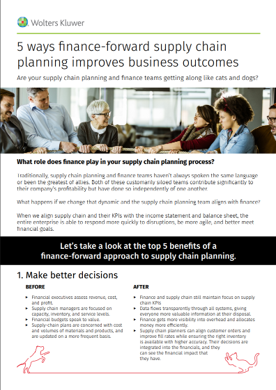
The eBook, 5 Ways Finance-Forward Supply Chain Planning Improves Business Outcome, focused on the bigger picture. It connected planning capabilities to measurable results like improved forecasting accuracy, reduced risk, and greater operational efficiency. For early-stage buyers, it helped answer the question: “Why does this matter?”
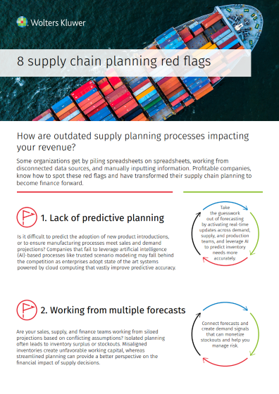
For those already feeling the pain, the infographic 8 Supply Chain Planning Red Flags offered a quick reality check. It highlighted common breakdowns organizations experience and gave buyers that all-too-familiar moment of “Yep… we’ve seen that.”
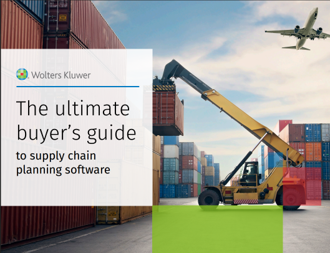
And for buyers ready to take the next step, The Ultimate Buyer’s Guide to Supply Chain Planning Software provided a clear path forward. From defining requirements to building a business case and evaluating vendors, it helped turn uncertainty into a plan.
The Outcome
The result was a set of versatile, thought leadership assets designed to support LinkedIn campaigns and engage buyers at different stages of the journey.
More importantly, it shifted the conversation.
Instead of selling software, Wolters Kluwer was helping buyers understand their challenges, evaluate their current state, and move forward with confidence.
And that’s what turns content into pipeline.